You spend ten minutes on skincare, apply your foundation, and it looks flawless — for about an hour. Then it happens: your foundation pools into the lines around your eyes, forehead, or mouth, and suddenly those lines look deeper than they did with bare skin. This is one of the most common makeup complaints for dry and mature skin, and it’s almost always fixable. Here’s why it happens and exactly what to change.
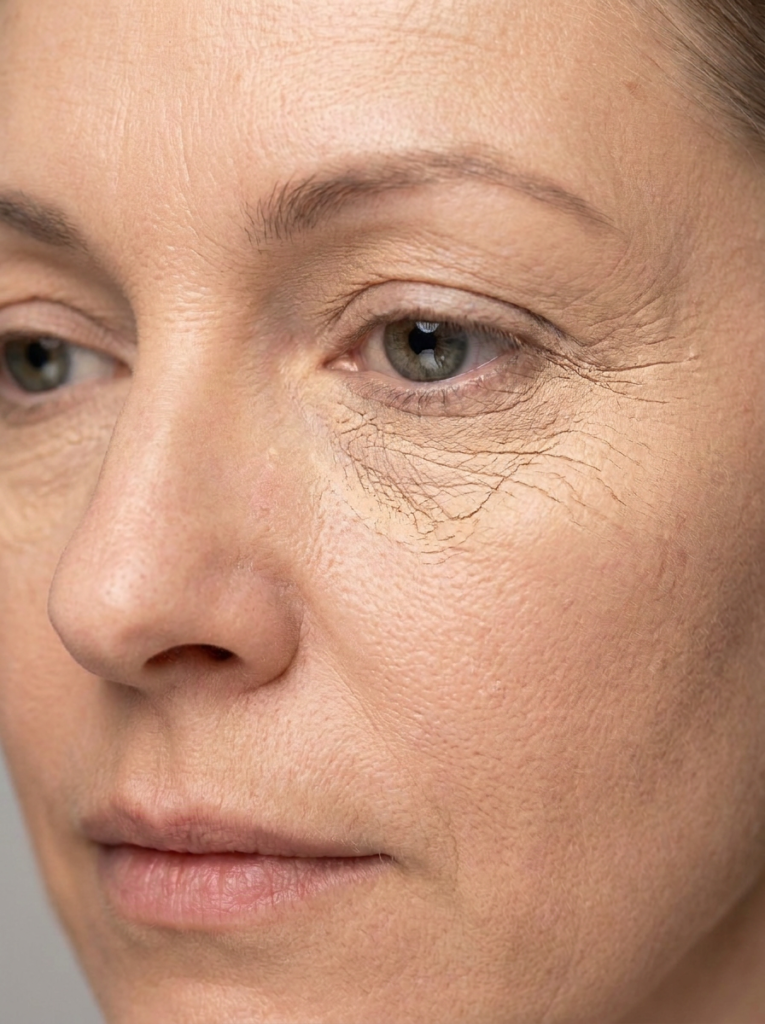
Why Foundation Settles Into Fine Lines
Your Skin Isn’t Hydrated Enough
Fine lines are small creases in the skin. When skin underneath is dry, those creases sit even lower relative to the surrounding surface, giving foundation more room to pool. Dry skin also absorbs product unevenly — it pulls moisture (and pigment) out of the foundation in some spots while leaving other spots too thick.
The Formula Is Too Heavy
Thick, high-coverage, or very matte foundations sit on top of skin rather than blending into it. That surface-level product has nowhere to go but into the lowest points of your skin’s texture — which are your fine lines.
You’re Applying Too Much at Once
A single heavy layer is more likely to pool than several thin ones. The more product sitting on the surface, the more there is to settle once your face moves throughout the day.
You’re Skipping (or Overdoing) Setting
Not setting foundation at all leaves it free to keep shifting all day. But over-setting — especially with a heavy, dry powder pressed into the whole face — can also emphasize lines instead of blurring them.
How to Prevent Foundation From Settling Into Fine Lines
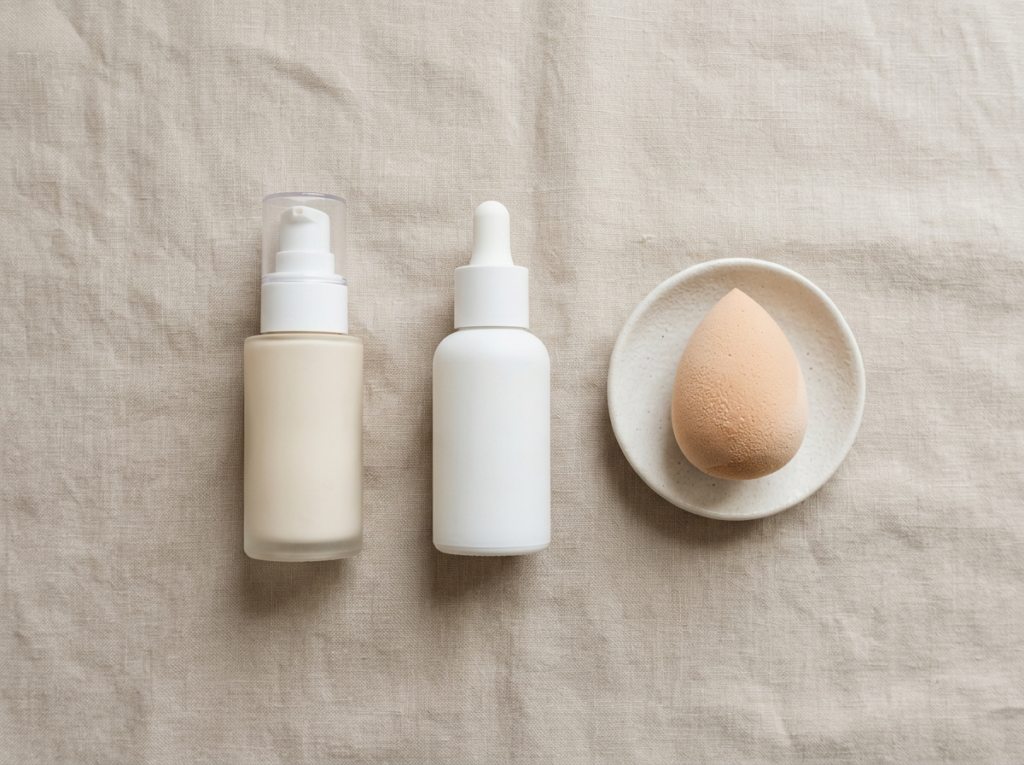
1. Hydrate Skin First — and Give It Time to Absorb
Apply your moisturizer (and any serums) a few minutes before foundation, not right before. Rushing straight from skincare to makeup means product is still sitting on the surface, which foundation will grab onto unevenly.
2. Choose a Hydrating Primer, Not a Matte One
Silicone-based, pore-filling primers work well for oily skin, but on dry or mature skin they can create a barrier that’s too smooth and dry underneath. A hydrating primer plumps skin slightly, which helps soften — not fill — the appearance of lines before foundation goes on.
3. Pick a Lightweight, Dewy, or Hydrating Foundation
Thick, full-coverage matte formulas are the most likely to settle. Liquid, buildable, or hydrating foundations move with your skin instead of sitting on top of it. If you need more coverage, build it up in thin layers rather than reaching for a heavier formula.
4. Apply in Thin Layers With a Damp Sponge
A damp makeup sponge (rather than a brush or fingers) presses foundation into skin and removes excess, rather than dragging product across the surface. This single technique change is one of the most effective fixes, especially around the eyes and mouth.
5. Set Strategically, Not Everywhere
Instead of dusting powder across your whole face, set only the areas that actually get oily — usually the T-zone. Leave drier, line-prone areas like the under-eyes and cheeks powder-free, or use a very light hand.
Products That Help
Hydrating primer: Look for a primer labeled “hydrating” or “dewy” rather than “pore-blurring” or “matte” if your skin runs dry. These typically use hyaluronic acid or glycerin instead of silicone as the base.
Lightweight, buildable foundation: Formulas marketed for mature or dry skin (often labeled “hydrating,” “dewy,” or “second-skin”) tend to contain ingredients like hyaluronic acid that help the product move with your skin rather than settle into it.
Setting spray over setting powder: For dry skin, a fine-mist setting spray can lock foundation in place without adding the extra dryness a powder can introduce.
FAQs
Does this only happen to mature skin? No — anyone with dry or dehydrated skin can experience this, regardless of age. It’s more common in mature skin because skin naturally loses moisture and produces less oil over time.
Should I skip primer altogether if it makes things worse? Not necessarily — the issue is usually the type of primer, not primer itself. Switch from a mattifying or pore-filling formula to a hydrating one before giving up on primer entirely.
Is powder foundation worse for fine lines than liquid? Generally, yes. Powder formulas tend to cling to dry texture more than liquid or cream foundations, which blend more seamlessly into skin.
How much time should I leave between skincare and makeup? Aim for at least 2–3 minutes so your moisturizer has time to absorb rather than sitting on the surface.
Will drinking more water fix this? Overall hydration helps skin health, but it won’t substitute for topical hydration. Skincare that draws and seals in moisture will have a more direct effect on how foundation sits.
Final Thoughts
Foundation settling into fine lines is almost never about your skin “not cooperating” — it’s usually a mismatch between your skin’s hydration level and your product or technique. Start with well-hydrated skin, switch to a lighter formula, and apply with a damp sponge in thin layers. Small changes here tend to make a bigger difference than switching foundations again and again.

I’m Eva, based in Korea, and I’ve spent years building my own approach to skincare around three things: daily sun protection, a healthy skin barrier, and luminous, well-hydrated skin. I believe good beauty is less about trying to look younger and more about looking healthy, polished, and well cared for at every age. Korean Glow Edit is where I share the K-Beauty products I actually use, the routines I keep for years, and the discoveries from Korea that I believe are worth knowing about.