Has your skin ever gone from “trying a new anti-aging product” to “red, flaking, and stinging” in a week? If so, you already know why this question matters. Retinol has the research behind it. Bakuchiol has the gentler reputation. For sensitive, mature skin, especially around the eyes, the right choice depends on your skin’s history.
This guide covers what each ingredient does, where each one tends to fail sensitive skin, and which products to try first based on your tolerance level.
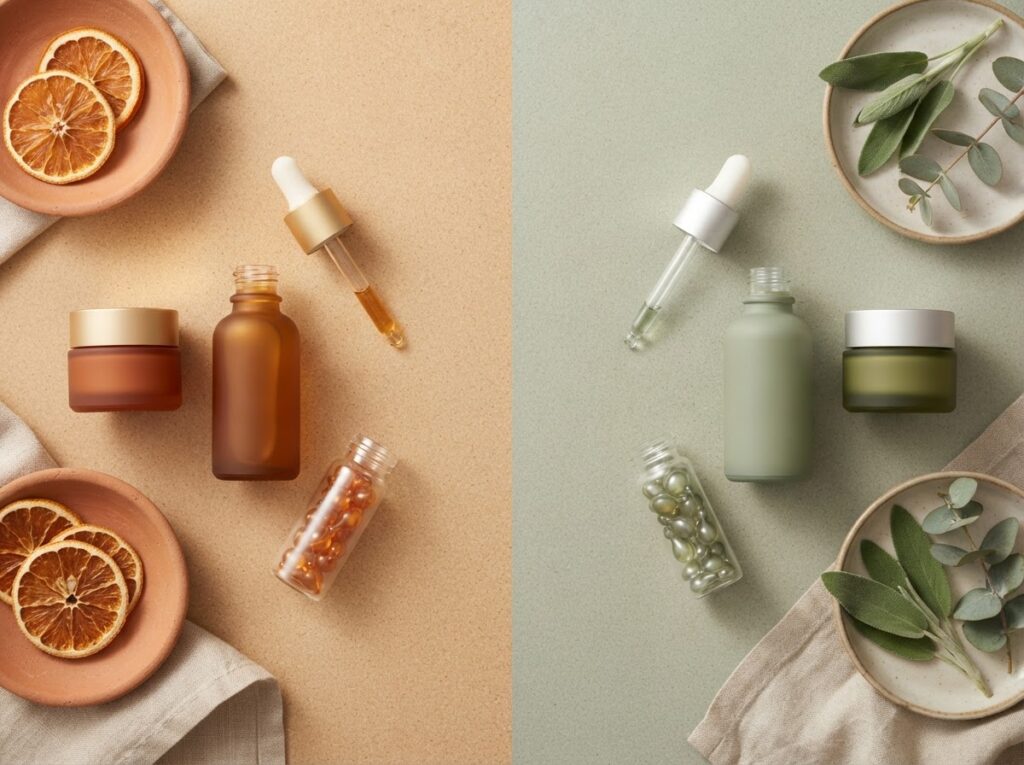
What’s the Actual Difference Between Retinol and Bakuchiol?
Retinol is a vitamin A derivative. Once it converts in the skin to retinoic acid, it speeds up cell turnover and stimulates collagen production. It’s one of the most studied anti-aging ingredients available. That same potency causes the redness, peeling, and purging some people experience when they start using it. This happens most often on skin that’s already reactive, thinning, or barrier-compromised from sun exposure or past over-exfoliation.
Bakuchiol comes from the seeds of the Psoralea corylifolia plant. It’s structurally unrelated to retinol, but it acts on some of the same skin receptors. That’s why brands often market it as a “natural retinol alternative.” A widely cited 2018 study in the British Journal of Dermatology found that bakuchiol performed comparably to retinol after 12 weeks. It reduced wrinkles and hyperpigmentation with meaningfully less reported stinging and irritation.
The short version: similar destination, very different roads to get there.
Why This Comparison Matters More for the Eye Area
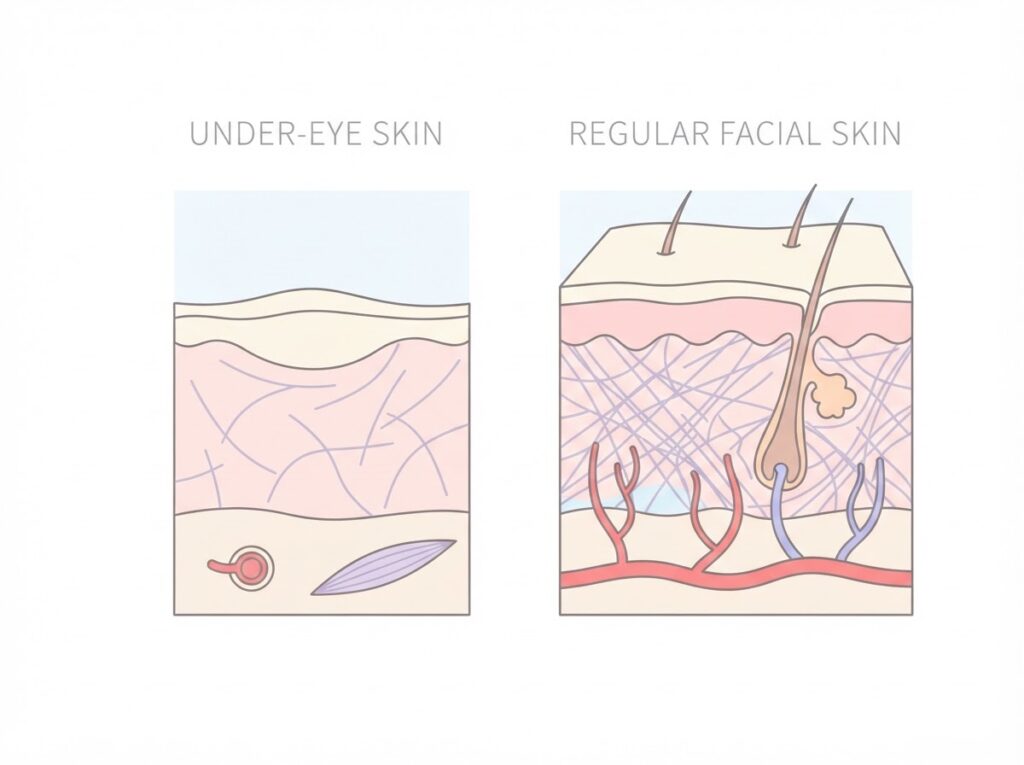
The skin around your eyes is thinner than anywhere else on your face. It has fewer oil glands and reacts faster to active ingredients, often within minutes rather than hours. On sensitive or mature skin, this is usually the first area where a formula “fails” — before it causes any problem elsewhere on the face.
That’s why many people who tolerate a light retinol serum on their cheeks or forehead still can’t use it near their eyes. It’s also why bakuchiol has become the go-to eye-area ingredient for visible firming without the risk.
Retinol vs Bakuchiol: Head-to-Head for Sensitive, Mature Skin
| Retinol | Bakuchiol | |
|---|---|---|
| Collagen stimulation | Strong, well-documented | Comparable results in studies, slower onset |
| Irritation risk | Higher, especially at first use | Low, even on reactive skin |
| Purging/peeling period | Common in first 2–4 weeks | Rare |
| Safe for eye area on sensitive skin | Only in low, encapsulated concentrations | Generally yes |
| Sun sensitivity | Increases photosensitivity — SPF is non-negotiable | Minimal increase |
| Pregnancy-safe | No | Generally considered safer, but check with your doctor |
| Speed of visible results | Faster for some people | Slower, more gradual |
Neither ingredient is objectively “better.” The right one depends on how your skin has reacted to actives in the past, and how much risk you’re willing to take on for potentially faster results.
Best Bakuchiol Eye Cream for Sensitive Mature Skin
If your skin has reacted to retinol before — even mild retinol — start here.
haruharu wonder Black Rice Bakuchiol Eye Cream
This is one of the most consistently well-tolerated bakuchiol eye creams for reactive skin. It pairs bakuchiol with niacinamide, adenosine, and natto gum to target fine lines, crow’s feet, and puffiness. Sensitive skin around the eyes rarely reacts to it. The fragrance-free formula also layers well under makeup, which matters if you apply it in the morning rather than only at night.
Best for: anyone whose skin has “purged” or reacted to retinol in the past, or who wants a single product that handles fine lines, puffiness, and dark circles without a multi-step routine.
Best Gentle Retinol for Mature Skin That Wants Faster Results
If your skin generally tolerates actives well but you want something gentler than a prescription-strength retinoid, this is the middle ground.
Good Molecules Gentle Retinol Cream
This formula pairs a lower-strength retinol with bakuchiol itself, plus grape seed oil and allantoin. It acts as a bridge product — you get retinol’s collagen-stimulating benefits while bakuchiol and soothing ingredients blunt the irritation. Use it nightly; the fragrance-free formula suits sensitive skin types.
Best for: skin that’s sensitive but not reactive — people who’ve had mild dryness from actives before, not full-blown redness or peeling.
LilyAna Naturals Retinol Cream
Many reviewers with mature, sensitive skin report tolerating this cream well, which has made it a long-standing favorite. It combines retinol with hyaluronic acid, jojoba oil, shea butter, and green tea to offset dryness. Use it on the cheeks, forehead, and neck, not the eye area, and pair it with a gentler bakuchiol product for your eyes.
Best for: someone who wants one affordable, well-reviewed retinol for the rest of the face while reserving a bakuchiol formula for the eye area specifically.
A Sensitive-Skin-Friendly Routine: Using Both Together
You don’t have to pick just one. A common approach for sensitive, mature skin:
- Eye area: Bakuchiol eye cream, morning and night, indefinitely. Low risk, consistent results over time.
- Rest of face: Start with a gentle retinol 2–3 nights per week, not nightly, to let your skin build tolerance.
- Always follow with SPF the next morning — retinol increases photosensitivity, and unprotected sun exposure will undo any anti-aging progress you’re making.
- If you notice redness, tightness, or flaking anywhere retinol touches, drop back to bakuchiol only in that area until your barrier recovers.
This layered approach works well for reactive skin. You get bakuchiol’s low-risk consistency where your skin reacts most, and retinol’s faster collagen response where your skin can handle it.
Frequently Asked Questions
Can I use bakuchiol and retinol at the same time? Yes, but not usually on the same area when your skin is sensitive. Many people use bakuchiol around the eyes and retinol on the rest of the face, or alternate nights on the same area.
Is bakuchiol actually as effective as retinol? Research suggests bakuchiol can match retinol’s improvements in fine lines and hyperpigmentation, generally with less irritation. Results still vary by person, and retinol has a longer track record of clinical study.
How long does it take to see results from bakuchiol? Most people notice visible improvement in texture and fine lines after 8–12 weeks of consistent use — similar to typical retinol timelines.
Is bakuchiol safe during pregnancy? Experts generally consider bakuchiol a safer alternative to retinol during pregnancy. Always confirm any active ingredient with your doctor before using it.
What if my skin still reacts to bakuchiol? This is rare. If it happens, check the rest of the formula — fragrance, essential oils, and high-percentage acids are the more likely culprits, not the bakuchiol itself.

I’m Eva, based in Korea, and I’ve spent years building my own approach to skincare around three things: daily sun protection, a healthy skin barrier, and luminous, well-hydrated skin. I believe good beauty is less about trying to look younger and more about looking healthy, polished, and well cared for at every age. Korean Glow Edit is where I share the K-Beauty products I actually use, the routines I keep for years, and the discoveries from Korea that I believe are worth knowing about.