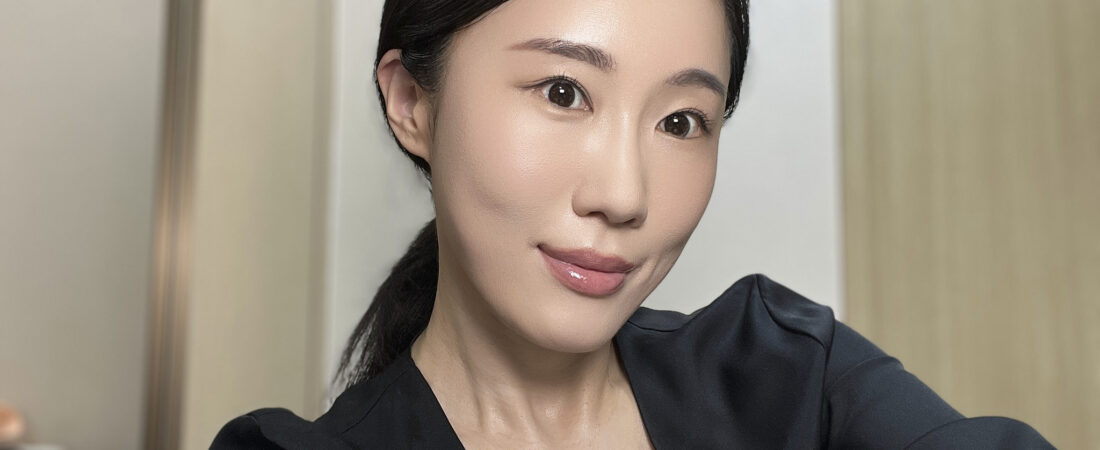
I used to think a glowy makeup finish and long wear time couldn’t coexist. Every dewy foundation I loved at 9 a.m. would turn into a shiny, patchy mess by 2 p.m. It would slide off my nose and pool in my smile lines. It looked nothing like the “glass skin” I was going for. It took me a while to realize the problem was never really the foundation. It was what I was doing — or not doing — to my skin before I ever picked up a cushion.
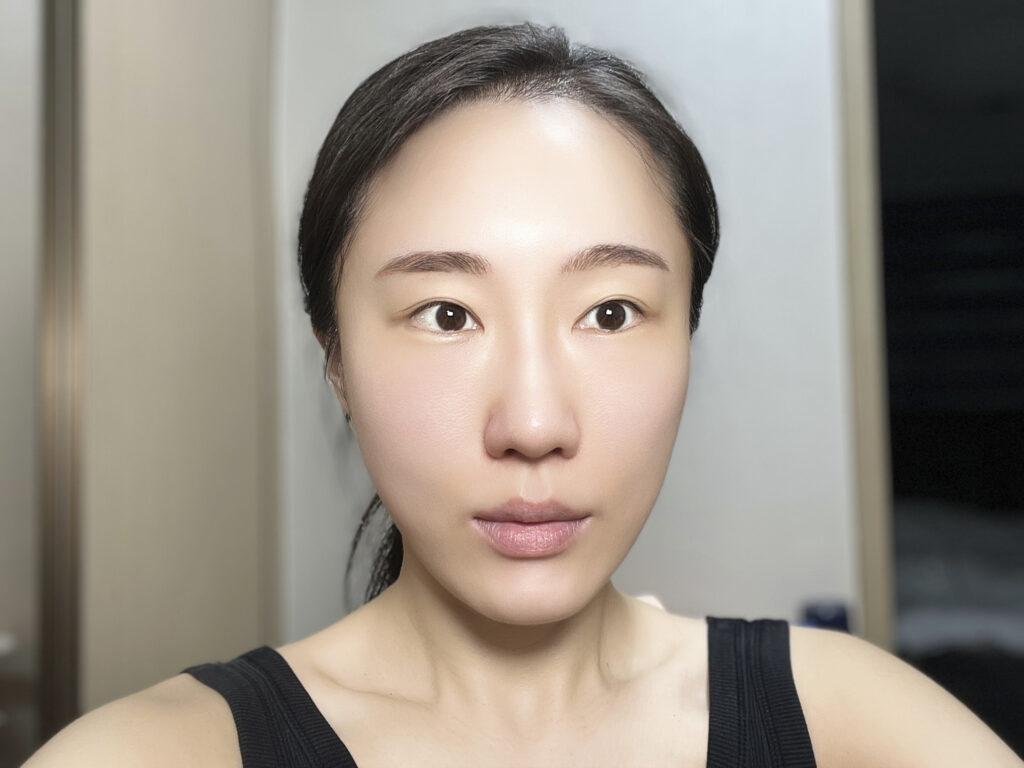
On a day when I knew I’d be out for hours (a wedding, actually), I documented the entire process. I photographed every stage, from bare skin to finished makeup. Then I took more photos after being out for over five hours. Here is the full routine, step by step, with real photos at every stage.
Why Glowy Makeup Usually Doesn’t Survive the Day
It helps to understand why dewy, radiant makeup fails faster than a matte look. A glowy base relies on light-reflecting, often slightly hydrating textures. That feels amazing on fresh, calm skin. But those same textures are much more sensitive to two things:
- Skin temperature — warmer skin produces more surface oil. Oil breaks down pigment and blurs the “glow” into a greasy shine.
- Barrier hydration — a dehydrated skin barrier pulls moisture out of your base products. That’s what causes the “settling into fine lines” look a few hours in.
Most glowy-makeup advice online focuses only on which foundation or setting spray to buy. My routine starts one step earlier than that — with the bare skin itself.
Step 1: The LA MUSE Mask
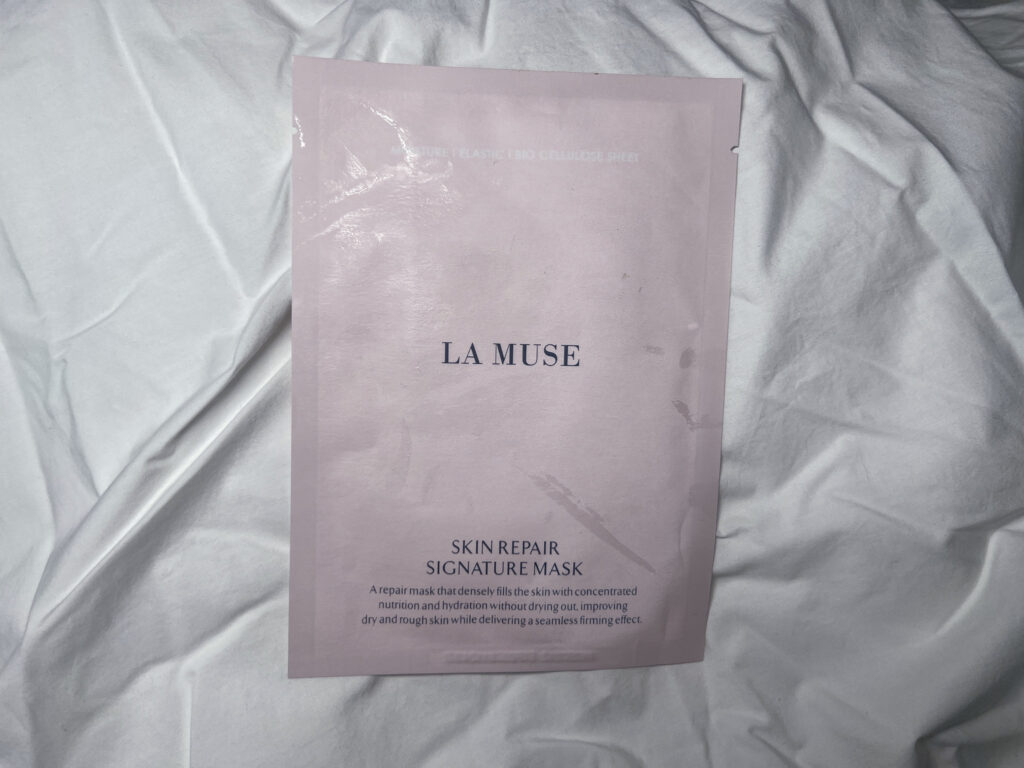
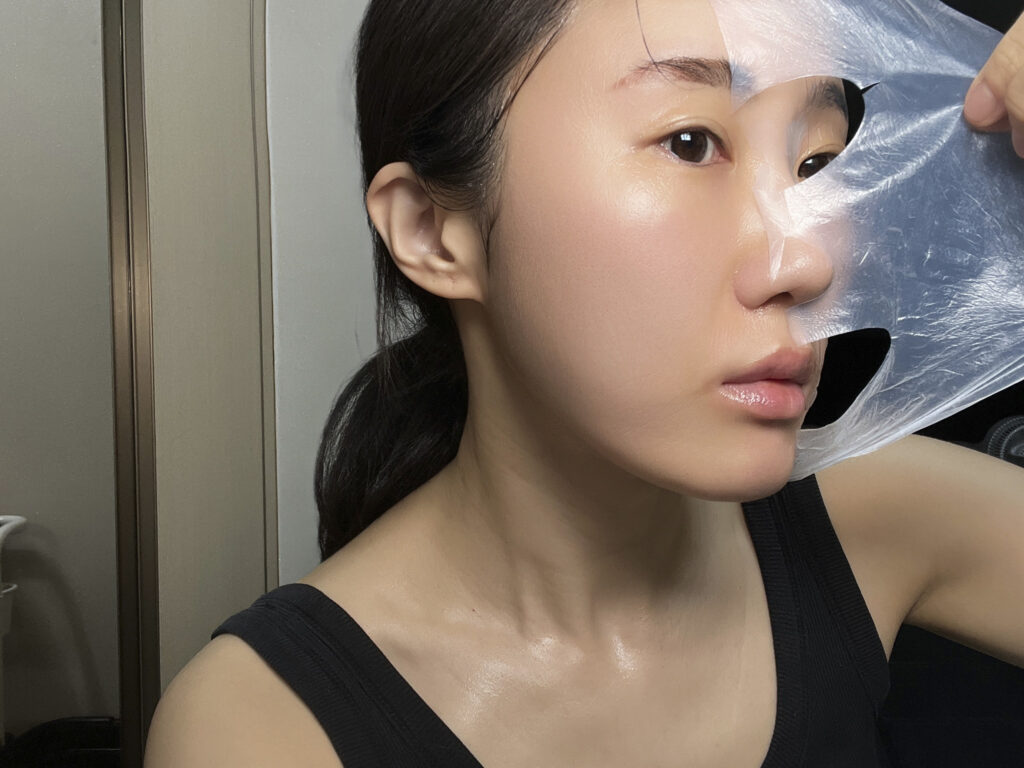
The first thing I reach for is a LA MUSE Skin Repair Signature Mask. It’s a hydrating sheet mask made to densely fill the skin with moisture and nutrients. It doesn’t leave the skin feeling heavy. It’s specifically what I use to prep skin before a long day of makeup.
I leave it on for the full recommended time. That gives the skin a real chance to absorb the essence, instead of just sitting damp on the surface.
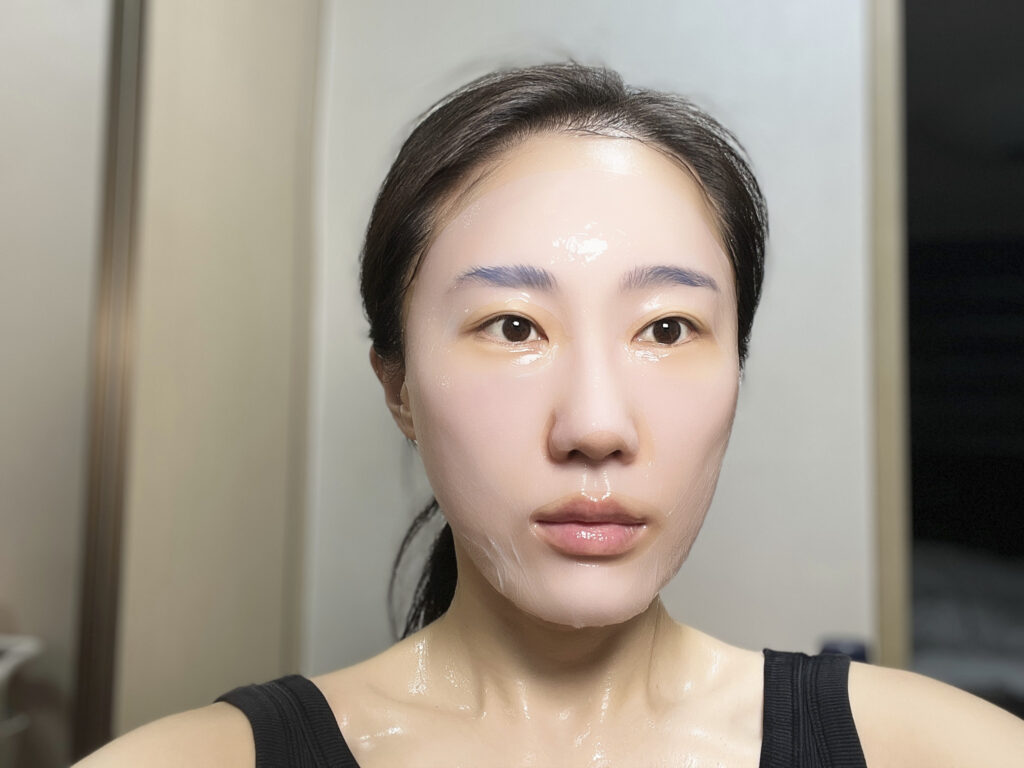
When I peel it off, I pat any leftover essence into the skin. I don’t wipe it away, so nothing goes to waste.
Step 2: Cool the Skin Down (This Is the Real Secret)
Most glowy-makeup routines skip this step entirely. It’s the one that made the biggest difference for me. Right after the mask, I cool the face down using my iCHA device.
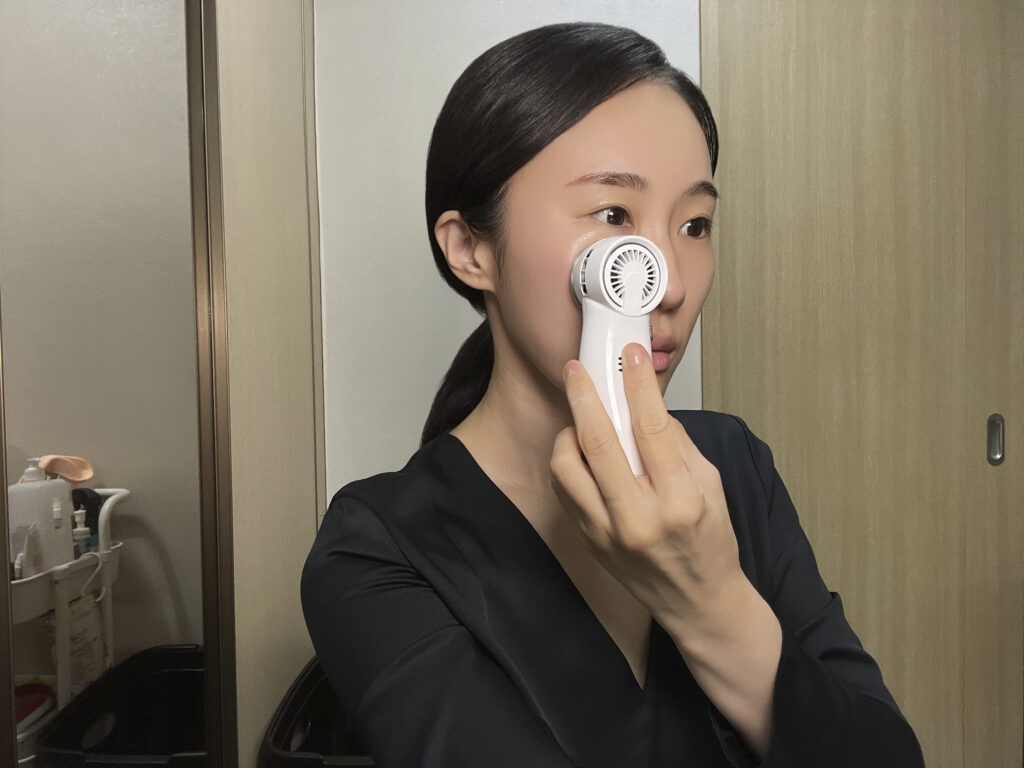
This step matters more than most people expect. When your skin is warm, your pores open up more. Oil production also increases. Warm skin can come from a hot shower, from being outside, or just from naturally warmer areas like the T-zone. That extra oil means foundation ends up sitting on top of the skin instead of blending into it. That’s exactly what causes makeup to “float,” separate, or slide a few hours later.
Lowering your skin’s surface temperature does the opposite. Pores tighten slightly, and oil production slows down. Your base product gets a calmer, cooler surface to grip onto. In my experience, this single step is the real foundation of long-lasting glowy makeup — more so than any specific product.
You don’t need a device like iCHA to get this effect. A chilled jade roller works well. So does a cold gua sha tool, or a cotton pad soaked in refrigerated toner. The goal is simply to bring the skin’s temperature down before base makeup goes on.
Step 3: Build the Skin Barrier Underneath
Once the skin is cooled and calm, I move into my usual barrier-focused skincare routine. I’ve written about this in detail in a separate post: Korean Skin Barrier Routine for Dry, Dull Skin.
The short version: a well-hydrated barrier lets a glowy base look like “your skin, but better.” Skip this step and go straight from mask to foundation, and you’ll likely see a common failure. The look is amazing for an hour, then turns cakey or patchy by midday. The skin underneath was simply never ready to hold onto the product.
Step 4: Foundation — A Thin Layer of Prada Cushion
For the base itself, I used the Prada cushion, applied in a thin, buildable layer rather than one heavy pass.
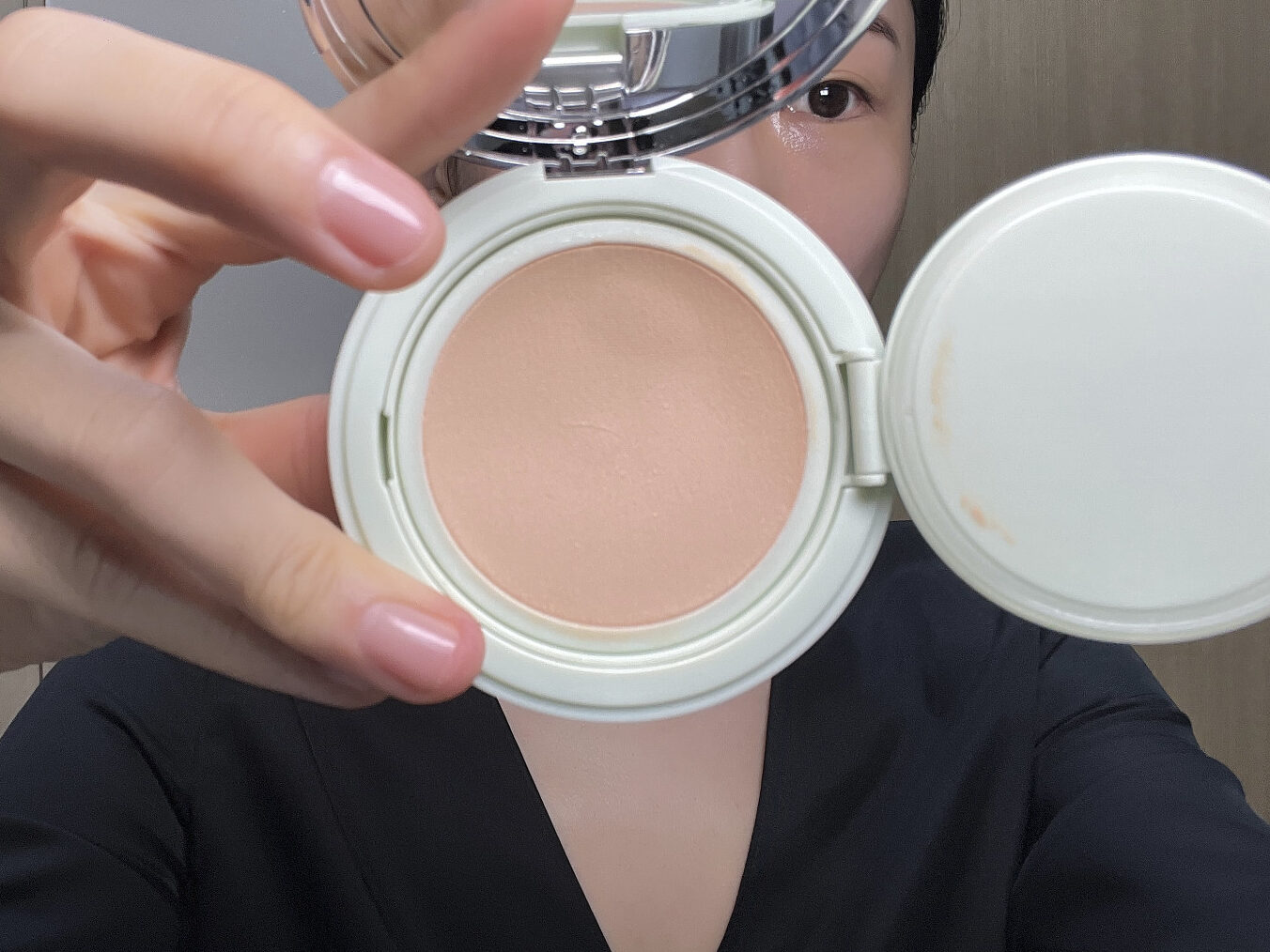
A thin first layer is key for a glowy finish. Cushion foundations applied too thickly leave more product sitting on the surface. More product means more that can move, crease, or separate as skin warms up over the day. Building coverage gradually keeps the finish looking like skin instead of a mask. A thin layer first, then spot-concealing only where needed, also gives it much better staying power.
The Finished Look
Here’s the completed glowy makeup look, right after finishing at 3:06 p.m.
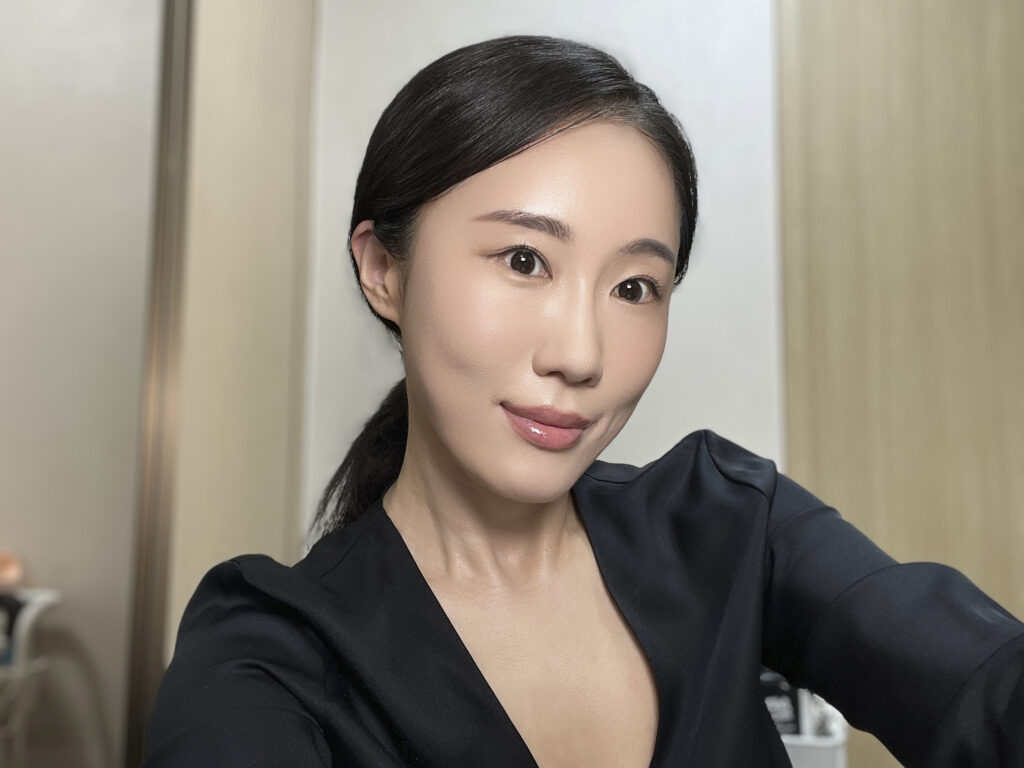
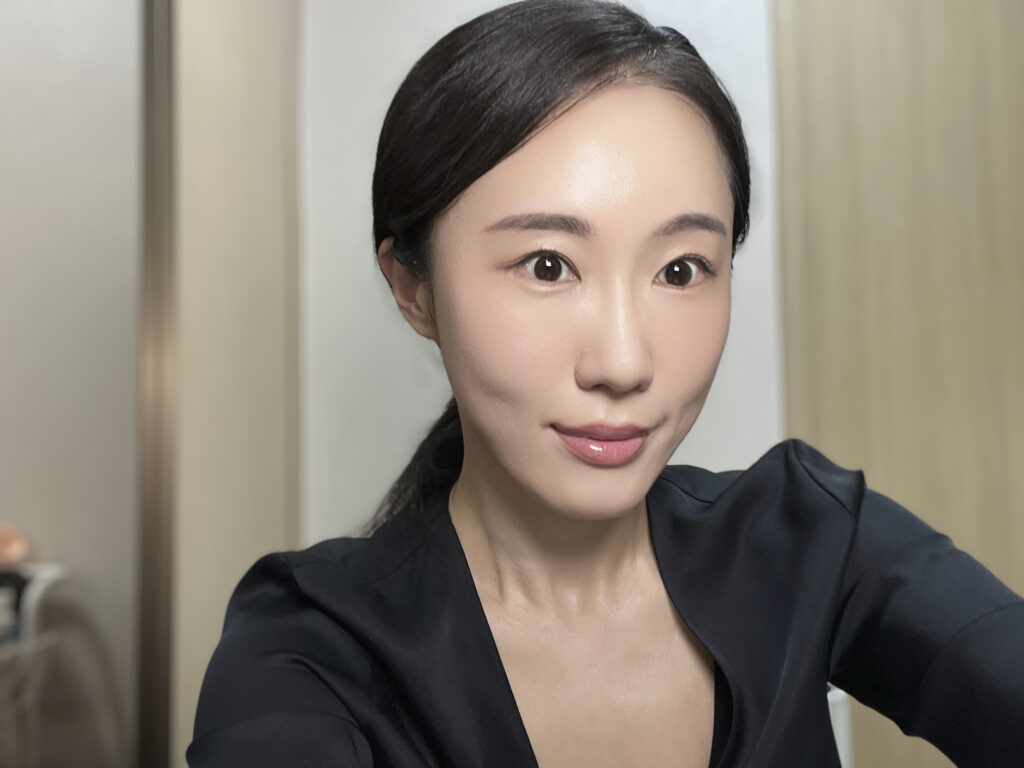
At this stage, the skin looks smooth and lit-from-within rather than shiny. That’s the difference between “glow” and “grease.” It’s also the effect the cooling step is designed to protect over time.
The Real Test: 5+ Hours Later
The real test of any glowy makeup routine isn’t how it looks fresh out of the mirror. It’s how it looks hours later, after talking, moving around, and being out in different temperatures. This next photo was taken at 8:43 p.m. That’s roughly five hours and forty minutes after the first one, once I’d already been out at an event and back home.
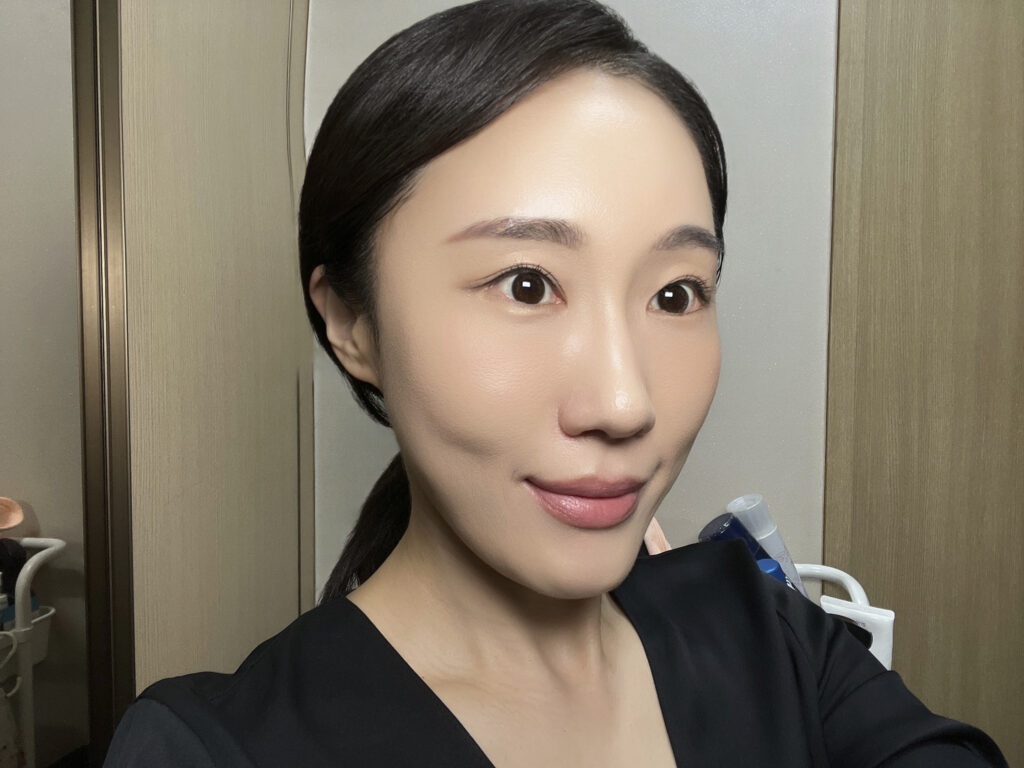
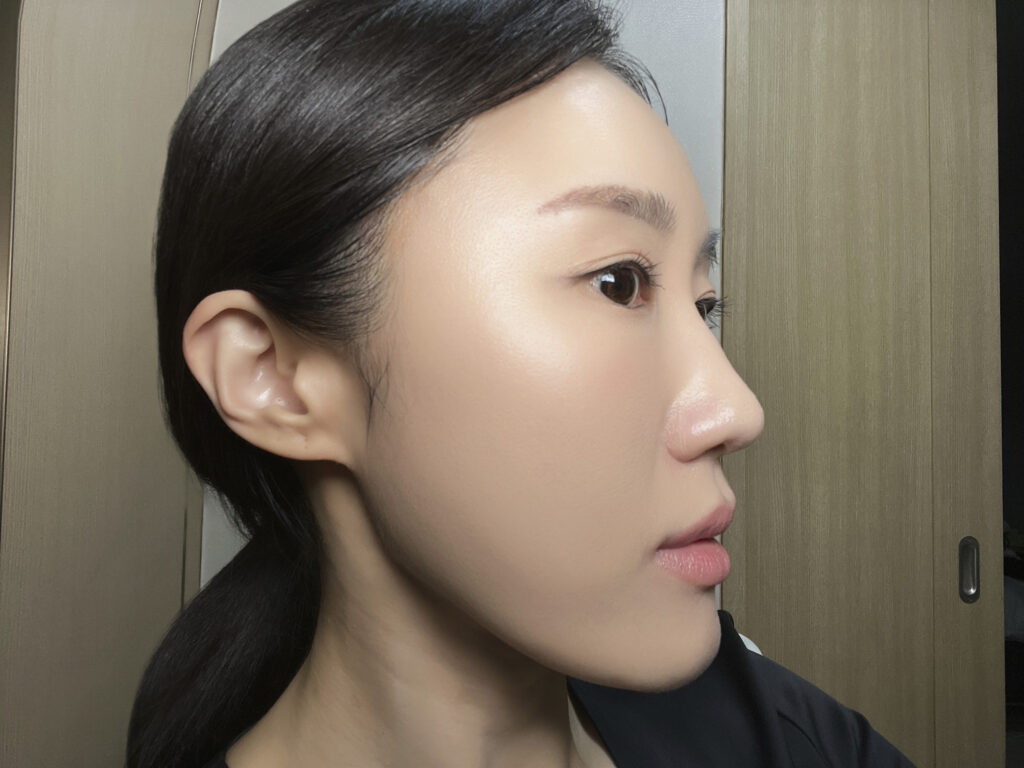
Comparing these photos to the fresh finish, the makeup barely moved. There’s no visible oxidation or color shift. There’s no patchiness gathering around the nose or mouth. The glow hasn’t tipped over into unwanted shine, either. It’s stayed even and skin-like, instead of sliding into the pores or creasing around the eyes. For a dewy base worn for nearly six hours, that’s a genuinely good result.
Quick Recap: The Glowy Makeup Routine
- Mask first — a hydrating sheet mask like LA MUSE to saturate the skin
- Cool the skin — a device like iCHA (or a cold roller/cold toner pad as a substitute)
- Hydrate the barrier — a proper skin barrier routine before any base product
- Apply base thin — a light first layer of cushion, building coverage only where needed
FAQ
Does cooling my skin actually make makeup last longer, or is that just a trend? Cooling the skin reduces surface oil production. It also slightly tightens pores at the moment of application. That gives foundation a calmer surface to adhere to. It won’t fix every longevity issue on its own. But paired with proper barrier hydration, it noticeably reduces sliding and separation for dewy, glowy finishes.
Can I get this effect without a device like iCHA? Yes.A chilled jade or ice roller works well. A cold stainless steel gua sha tool does too. So does a cotton pad soaked in refrigerated toner and pressed over the face for a minute. All of these lower surface skin temperature in a similar way.
Will this work with any foundation, or only cushions? The mask, cooling, and barrier-prep steps help with any base formula. But a thin, buildable application tends to pair best with a glowy finish. The light layer of Prada cushion used here is one example. Heavier layers are simply more prone to separating.
If your glowy makeup usually looks great for the first hour and falls apart after, try a different starting point. Work backward from your skin’s temperature and barrier health, instead of just switching foundations. It made a bigger difference for me than any single product change has.

I’m Eva, based in Korea, and I’ve spent years building my own approach to skincare around three things: daily sun protection, a healthy skin barrier, and luminous, well-hydrated skin. I believe good beauty is less about trying to look younger and more about looking healthy, polished, and well cared for at every age. Korean Glow Edit is where I share the K-Beauty products I actually use, the routines I keep for years, and the discoveries from Korea that I believe are worth knowing about.